
How to Choose Running and Sports Shoes
By Athlete's Choice team · Last updated
Match the shoe to the activity
Running shoes are built for forward motion and repeated impact. Court shoes for badminton, squash and similar sports give lateral support and use non-marking soles. Cross-training shoes are flatter and more stable for gym work. Using the right shoe for the sport reduces slipping and helps comfort.
Fit
Your feet swell during the day, so try shoes on in the afternoon or evening. Leave about a thumb's width between your longest toe and the end of the shoe. The heel should be held without slipping, and the forefoot should be wide enough for your toes to spread. If one foot is larger, fit the larger foot.
Cushioning
Soft, high-cushion shoes suit longer runs and runners who like a plush feel. Moderate cushioning gives a balance of comfort and ground feel for everyday training. Minimal cushioning has a firmer feel and suits those used to it. More cushioning is not always better, and personal comfort matters more than the label.
Heel drop and stability
Drop is the height difference between heel and forefoot, often between 0 and 12 millimetres. Higher drops are common in traditional running shoes, and lower drops encourage a more midfoot landing. If you are changing drop, do it gradually. Stability shoes add support for runners whose ankles roll inward, but many runners do well in neutral shoes.
Surface
Road shoes have smoother soles and more cushioning. Trail shoes have deeper lugs for grip on dirt and rock. Treadmill and gym use is fine in road or cross-training shoes. Check that outsoles suit the surface you use most.
Quick comparison
| Use | Look for | Cushioning | Sole |
|---|---|---|---|
| Road running | Flexible forefoot | Moderate to high | Road |
| Trail running | Grip and toe protection | Moderate | Lugged |
| Court sports | Lateral support | Moderate | Non-marking |
| Gym training | Stable, flat base | Low to moderate | Flat |
Before you buy
Use our size guide, check the size range in stock, and ask us if you are between sizes. Browse the shoes below or try our guided finder.
Running and sports shoes in stock now
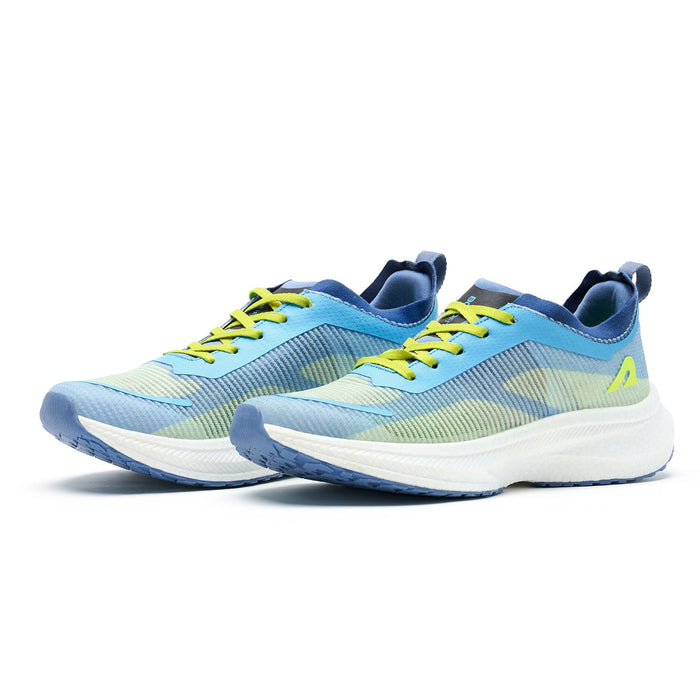
Still unsure? Try our guided finder and we will point you to a match.
Frequently asked questions
How much room should I leave in running shoes?
About a thumb's width between your longest toe and the front of the shoe.
When should I replace running shoes?
Many runners replace them after roughly 500 to 800 kilometres, or sooner when the cushioning feels flat or the soles are worn.
Can I use running shoes for badminton or squash?
Court shoes are better for these sports because they give lateral support and grip on indoor floors.
What is heel drop?
The height difference between the heel and forefoot of the shoe, measured in millimetres.